


The short version: A frustrating flight diversion meant my plans to tour the famous Pilsner Urquell brewery were entirely scrapped. Instead, I spent 24 hours wandering the streets to see if Pilsen could stand on its own without the beer taps. Between the tallest cathedral spire in Czechia, one of Europe’s largest synagogues, and a surprisingly peaceful ring of parks, the city offers far more than just a famous pint.
On this page8 sections
- How big is the Pilsner Urquell brewery complex?
- What is there to see in Náměstí Republiky (Republic Square)?
- Why is St. Bartholomew’s Cathedral famous in Czechia?
- How large is the Great Synagogue in Pilsen?
- Where are the best parks in Pilsen’s city centre?
- Is Pilsen worth visiting if you skip the brewery?
- Where to stay in Pilsen
- Frequently asked questions
Pilsen. My plans for this Czech city were, I thought, pretty straightforward: head straight for the world-famous Pilsner Urquell brewery tour, then dive into the intriguing historic underground network that lies beneath its streets. Simple enough, a couple of key highlights, or so I thought.
But, as any seasoned traveller knows, the journey itself can sometimes throw you a proper curveball. Getting to Pilsen turned into an unexpected adventure of its own. We – and by “we” I mean the planeload of passengers I was on – ended up diverted to Vienna, Austria. Not exactly on the direct route to Western Bohemia. After a good while sitting on the tarmac there, we finally landed in Czechia a full four hours later than scheduled.
So, that much-anticipated brewery tour and the exploration of Pilsen’s hidden underground world? Completely, utterly off the table. Annoying? Definitely. Frustrating? You bet. But, on the bright side, during the lengthy delay on the tarmac in Vienna, I did manage to rather cheekily blag a quick selfie in the cockpit with the pilots! Silver linings, eh? You’ve got to take them where you can find them. A small consolation, perhaps, but a unique travel story snippet nonetheless.
So, with my original, meticulously researched plans in tatters, I was left to simply discover Pilsen from street level, with no fixed agenda, no tour bookings, just a couple of hours to wander before needing to move on… and, of course, with the advantage of seeing it from up here, thanks to the drone.
With those main tours firmly off my list, I was keen to see what Pilsen itself offered beyond its undeniable global beer connection. I’ll be honest, I didn’t have huge expectations for the city itself, imagining it might be somewhat overshadowed by its famous brewery. But what I actually found was a city centre boasting some genuinely well-kept and impressive architecture, a couple of really quite striking historic buildings, and, rather unexpectedly, some very pleasant and extensive green spaces. So, this blog post is simply a reflection of what I saw on that unscheduled, impromptu wander – a look at the city’s surface, its prominent landmarks, and an attempt to get a feel for what makes it tick, even when your plans go completely out the window.
How big is the Pilsner Urquell brewery complex?
The Pilsner Urquell brewery is an absolutely massive industrial complex that entirely dominates its side of the city. While a flight diversion meant I missed the legendary underground cellar tour, viewing it from the air reveals the sheer scale of the historic 1842 brewhouses and the vast fermentation areas that changed global beer production forever.
Watch this section in the video → 1:11
That’s the iconic Pilsner Urquell brewery from the air. You can see straight away that it’s an absolutely massive complex – it really does dominate this particular part of the city, a sprawling industrial landmark that speaks volumes about its importance to Pilsen and to the world of beer.

It was a real shame to miss the organised tour. I was genuinely curious to delve into the history of how Pilsner lager was first created here in 1842, revolutionising beer brewing globally. The tours typically take you through the historic cellars, explain the unique brewing process involving soft Pilsen water, Saaz hops, and triple decoction, and, of course, usually culminate in a tasting of unfiltered, unpasteurised Pilsner Urquell straight from an oak lager cask. That’s an experience any beer enthusiast would look forward to.
Still, this aerial perspective at least gives you a sense of the sheer scale of the operation – the historic brewhouses, the vast fermentation and lagering cellars (much of which are underground), and the modern bottling plants – a scope you wouldn’t fully appreciate from ground level alone. It’s definitely staying on the list for a hopefully less eventful return visit one day!
What is there to see in Náměstí Republiky (Republic Square)?
Náměstí Republiky is the geographic and cultural heart of Pilsen, standing as one of the largest medieval town squares in Europe. It is anchored by a towering Gothic cathedral and framed by beautifully preserved, pastel-coloured Renaissance and Baroque burgher houses that demand attention.
Watch this section in the video → 1:30
The true centre of Pilsen, both geographically and culturally, is undoubtedly Náměstí Republiky (Republic Square). And when I say it’s big, I mean it’s really big – it’s one of the largest medieval town squares in Europe, a vast, open quadrangle that immediately gives the city a sense of space and importance.

It’s lined with an impressive array of quite grand, colourful burgher houses, showcasing a variety of architectural styles from Gothic origins to Renaissance and Baroque facades. Many of these buildings are beautifully maintained, their pastel shades and ornate decorations adding to the square’s handsome appearance. It’s clearly a focal point for the city; there were people meeting up, relaxing on benches, and enjoying the outdoor seating at the numerous cafes and restaurants that spill out onto its edges. It’s the sort of place where you can easily get your bearings, grab a coffee, and just watch city life unfold for a bit.
Prominent features within the square include the striking Renaissance Town Hall, with its distinctive sgraffito decoration, and the elegant Marian Plague Column, erected in 1681 as a symbol of gratitude for the city being spared from a major plague epidemic. More recently, three rather unique and somewhat controversial modern gilded fountains were installed in different corners of the square. They represent a camel, an angel, and a greyhound – figures taken from Pilsen’s coat of arms – and their abstract design certainly provides a talking point against the historic backdrop. The square feels like the well-preserved and still-beating historic core of the city.
Why is St. Bartholomew’s Cathedral famous in Czechia?
St. Bartholomew’s Cathedral boasts the tallest church spire in the Czech Republic, piercing the sky at over 102 metres. This imposing High Gothic giant has watched over the city centre since the 13th century, its intricate stonework completely defining the Pilsen skyline.
Watch this section in the video → 3:20

Dominating one entire side of Republic Square, and indeed the entire Pilsen skyline, is the magnificent St. Bartholomew’s Cathedral (Katedrála svatého Bartoloměje). This is a classic example of High Gothic architecture, and its towering spire is, apparently, the tallest in the Czech Republic, soaring to an impressive 102.6 metres (around 337 feet). It certainly looks it, acting as a constant landmark as you navigate the city.

You can get right up close to appreciate the centuries-old stonework, the intricate details around the portals, and the sheer ambition of its construction, which began in the late 13th century and continued for over two hundred years. The famous “Pilsen Madonna,” a precious Gothic statue from around 1390, resides within its hallowed walls, though on this impromptu wander, I focused on admiring its imposing exterior. It’s impressive just for its immense age and the fact that it has stood there for so long, a silent witness to centuries of Pilsen’s history, right in the heart of the city. For those with a head for heights and a bit more time, climbing the tower offers panoramic views over the city and the surrounding West Bohemian landscape.
How large is the Great Synagogue in Pilsen?
The Great Synagogue in Pilsen is one of the largest in Europe. Its massive twin towers and distinct architectural style give it a powerful presence that completely stands out from the surrounding buildings in the city centre.
Watch this section in the video → 3:40
Pilsen’s Great Synagogue is a monumental piece of architecture, ranking as the second or third largest synagogue in Europe and fifth largest globally. Completed in 1893 in a striking Moorish-Romanesque style, its twin 45-metre towers offer a solemn, powerful testament to the city’s significant Jewish history.
A short walk from the bustling main square, I came across another of Pilsen’s truly remarkable architectural landmarks: the Great Synagogue (Velká Synagoga). I knew that Pilsen had a significant Jewish history, with a community dating back centuries, and this monumental building stands as a powerful testament to that heritage.

It is one of the largest synagogues in Europe – sources vary, but it’s generally ranked as the second or third largest on the continent, and the fifth largest in the world. And it certainly feels it. The architecture is stunning and very distinct from the other historic buildings in Pilsen. Built in the late 19th century (completed in 1893) in a striking Moorish-Romanesque style, it features two prominent 45-metre-high towers and a large central dome. The red and white unplastered brickwork banding and the intricate oriental and Byzantine motifs are particularly eye-catching.
Even from the outside, the Great Synagogue has a powerful, solemn presence. Its history is poignant; it served as a religious centre for a thriving Jewish community that was decimated during the Holocaust. Miraculously, the building itself was spared destruction during World War II, reputedly because it was used as a warehouse by the occupying forces and its sheer size made it a useful landmark. After decades of neglect during the Communist era, it underwent extensive restoration and now serves not only as a place of worship but also as a concert hall and exhibition space, a symbol of resilience and remembrance.
Where are the best parks in Pilsen’s city centre?
The best green space in the city centre is the ring of parkland, known as Šafaříkovy Sady, that completely encircles the Old Town. It is well used by locals and gives the historic city a surprisingly calm and livable atmosphere.
Watch this section in the video → 4:00
A continuous, beautiful ring of parkland known as Šafaříkovy sady entirely encircles much of Pilsen’s historic old town. Following the path of the demolished medieval city walls, this accessible green belt provides a surprisingly peaceful and shady escape right in the middle of the urban centre.
One of the real, and most pleasant, surprises for me in Pilsen was discovering the beautiful ring of parkland, predominantly known as Šafaříkovy sady, that encircles much of the old historic town centre. I genuinely wasn’t expecting to find so much accessible and well-maintained green space right in the heart of the city.

These parks largely follow the course of the former medieval city walls, which were gradually demolished from the late 18th century onwards and replaced with these green promenades. It’s obviously a space that’s well-used and cherished by locals. People were out walking their dogs, jogging, sitting on benches enjoying the sunshine (what little there was on my visit!), and just generally taking a breather from city life. There are well-kept paths, mature trees providing welcome shade, colourful flowerbeds, and various fountains and small monuments dotted throughout.
This green belt makes the city feel much more liveable and provides a really nice, gentle contrast to the historic stone and plaster of the buildings. It was a genuinely pleasant area to just stroll through, breaking up the urban exploration and offering a different, softer side to Pilsen.
What is the atmosphere like in Pilsen’s side streets?
Beyond the main landmark sites, I just spent some time aimlessly walking through the side streets, branching off from the main square. That’s often how you pick up on the smaller, more nuanced details of a place – the things that give it its unique character beyond the headline attractions.

Pilsen revealed different building styles away from the grandeur of Náměstí Republiky; you could spot some lovely Art Nouveau details on some facades, mixed in with more functional but still characterful 19th and early 20th-century architecture. It was interesting to see how the city’s efficient tram system navigates the historic streets, a blend of old and new. The general day-to-day of the place felt quite calm and unhurried, especially compared to the bustle one might expect in a city of its size (it’s the fourth largest in Czechia). It’s clean, and the architecture, even on the less grand streets, has a sort of solid, well-built, historic character. It was a good way to just observe, to see the city as its residents experience it, rather than just rushing between tourist hotspots.
Is Pilsen worth visiting if you skip the brewery?
Yes, Pilsen is absolutely worth visiting even if you do not drink beer or miss the brewery tour. The city boasts a towering Gothic cathedral, one of Europe’s largest synagogues, and a ring of peaceful parks that make it a great historical detour on its own.
Watch this section in the video → 4:52
So, my much-anticipated, plan-A trip to Pilsen didn’t quite go as intended. No brewery tour, no underground exploration, all thanks to that lengthy flight diversion. But, the definite upside of that travel hiccup was simply discovering the city itself, with fresh eyes and no particular agenda.
And what I found was that the historic centre of Pilsen is genuinely attractive, with its grand square and beautifully preserved architecture. The Cathedral of St. Bartholomew and the Great Synagogue are quite striking, powerful landmarks, each telling a significant story of the city’s past. And those extensive green spaces ringing the old town were a real, unexpected find, adding greatly to the city’s appeal. Seeing it with the drone also offered a valuable perspective on the city’s layout and the scale of its key sites that I wouldn’t have had otherwise.
What I ultimately took away is that Pilsen is much more than just its world-famous beer. It’s a very decent, handsome city to explore on foot, and there’s an easily appreciated sense of history that pervades its streets and squares. If you find yourself here, even if your own plans change unexpectedly, it’s certainly worth just having a good walk around and seeing what you discover.
It just goes to show, doesn’t it? Sometimes the detours, the unplanned moments, are where you find things you weren’t necessarily looking for, leading to a different, but no less valuable, travel experience.
A Few Practical Notes (For When Your Plans Don’t Go Awry!):
- Getting There: Pilsen is easily accessible from Prague by train (approx. 1.5 hours, frequent services) or bus. It’s a major transport hub in West Bohemia.
- Pilsner Urquell Brewery Tour: Highly recommended. Book in advance, especially during peak season. Tours are offered in multiple languages.
- Pilsen Historic Underground: This network of medieval cellars, wells, and passages under the city is another top attraction. Guided tours are essential and should also be booked ahead.
- Best Time to Visit: Spring and autumn offer pleasant weather for exploring. Summer can be busy. Pilsen also hosts various festivals throughout the year, including a popular beer festival.
- Length of Stay: To do justice to the brewery, the underground, the main sights, and perhaps a museum or two, a full day or an overnight stay would be ideal.
If you’ve had a travel experience where things went spectacularly off-script but you ended up discovering something worthwhile or unexpected as a result, I’d be really interested to read about it in the comments below! It’s always good to hear those “silver lining” travel stories!
Where to stay in Pilsen
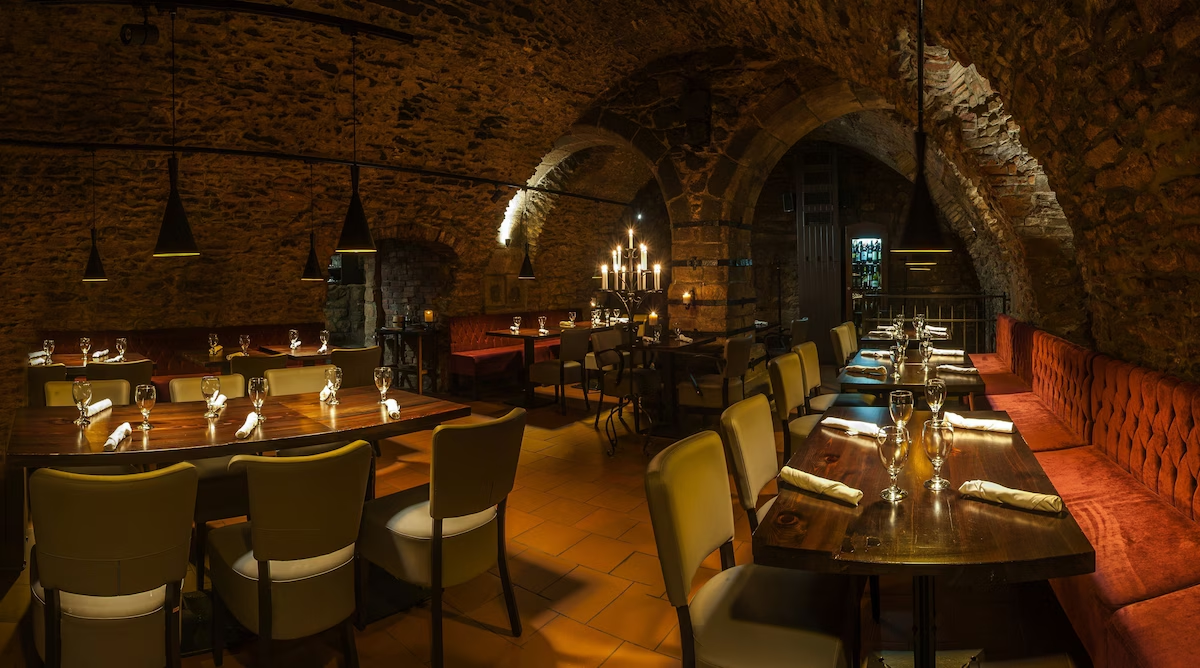
Since my plans went entirely out the window, I quickly realised that Pilsen’s compact historic core is the only place you want to base yourself. The accommodation scene here is full of character, leaning heavily into the city’s architectural heritage rather than relying on the large corporate chains you might expect next to a global brewery. Staying central means you can ditch the logistics and simply wander from the cathedral out to the parks.
If you want to lean into the historic atmosphere, look for the restored Renaissance burgher houses right on Republic Square. These independent properties often feature original vaulted cellars and expose the city’s medieval bones, giving you a tangible sense of the past alongside front-row views of St. Bartholomew’s Cathedral before the day-trippers arrive.
For something a bit sharper, there is a solid handful of modern, design-forward hotels sitting just off the main drag, near the city’s green ring of parks. These places trade the historic quirks for minimalist interiors and a much quieter night’s sleep, acting as the perfect, low-key retreat after a chaotic travel day or a long stint at the brewery.
Frequently asked questions
How do you get to Pilsen from Prague?
Pilsen is very easily accessible from Prague. It takes about an hour and a half by train, with frequent services running throughout the day, making it a very straightforward day trip or onward connection.
Do you need to book the Pilsner Urquell Brewery tour in advance?
Yes, it is highly recommended to book your brewery tour well ahead of time, especially during the peak summer season. It’s the most popular attraction in the city, and spots for the underground cellar tour fill up fast.
Is Pilsen worth visiting if you don’t drink beer?
Definitely. Between the immense gothic architecture of St. Bartholomew’s, the historic weight of the Great Synagogue, and the beautiful ring of parks replacing the old city walls, Pilsen has enough character to justify a visit entirely independent of its brewing history.
Can you climb the tower at St. Bartholomew’s Cathedral?
Yes, though it may occasionally be closed for maintenance as I experienced. When open, climbing the tallest church spire in Czechia offers the absolute best panoramic views over the city and the surrounding West Bohemian landscape.
How long should you spend visiting Pilsen?
To properly tour the brewery, explore the historic underground network, and wander around Republic Square and the Great Synagogue without rushing, a full day or an overnight stay is ideal.
What is the best time of year to visit Pilsen?
Spring and autumn offer the most pleasant weather for exploring the city centre and parks on foot. Summer can get quite busy, though it does coincide with several popular local beer festivals.