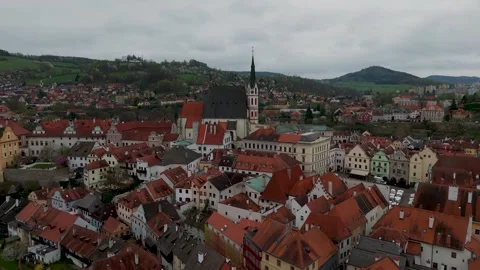
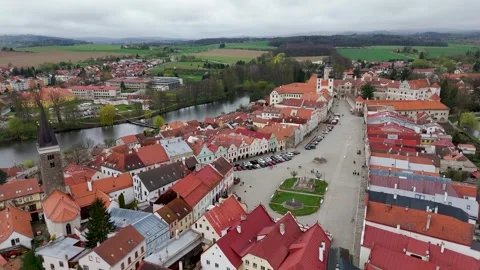
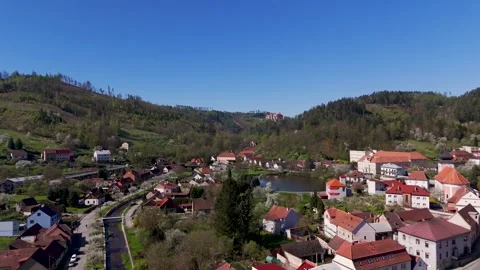
Does Czechia actually offer more than cheap pints and stag dos in the capital? I spent weeks flying drone routes across Bohemia and Moravia to find out. What I captured is an impressive, isolated network of gothic towers, authentic monastic architecture, and rugged valleys built in spite of their geography.
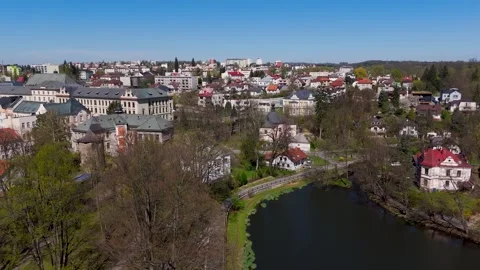
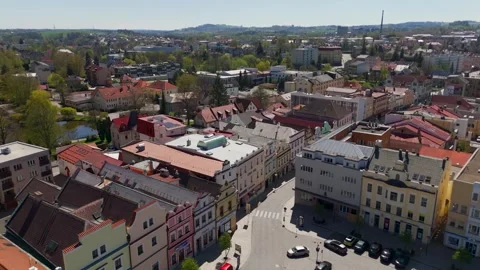
Locations featured in Czechia
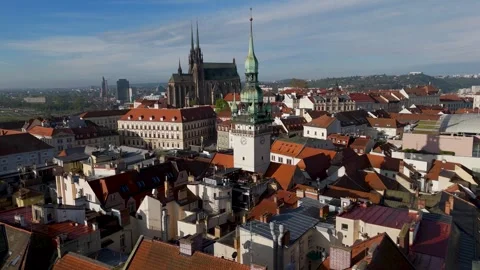
St. Jacob's Church
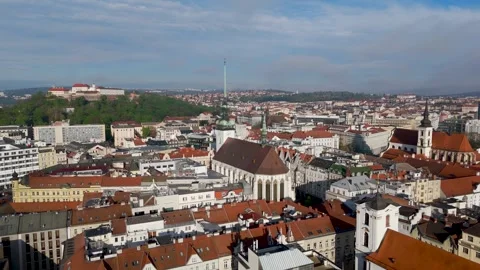
A towering late-gothic landmark in Brno, characterized by its sharp spire and dense urban surroundings.
Spilberk Castle
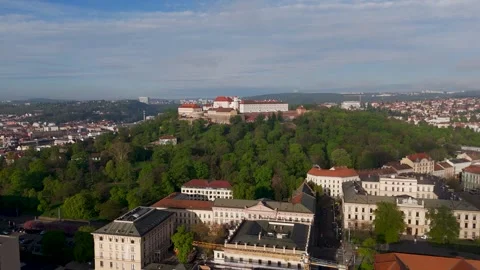
A massive hilltop fortress dominating the Brno skyline, surrounded by thick woodland and old defensive walls.
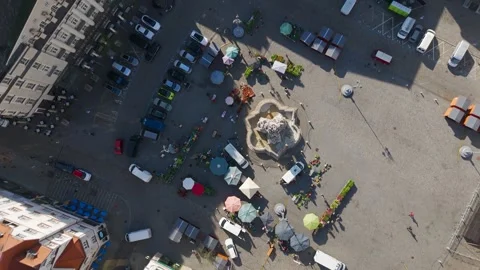
Freedom Square
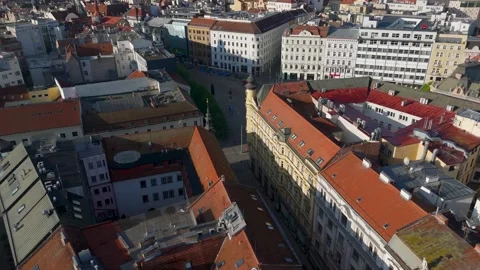
The central geometric hub of Brno, featuring bustling tram lines and complex historic architecture.
St Peter and Paul Cathedral
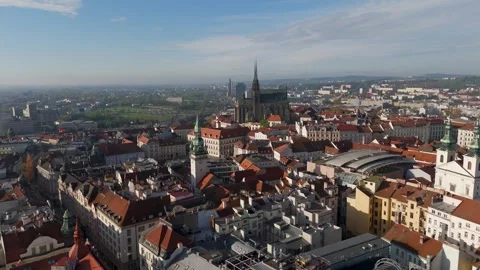
The heavy, twin-spired gothic cathedral anchoring the Brno cityscape atop Petrov hill.
Stara Radnice
Brno's Old Town Hall, notable for its ornate gothic portal and historic viewing clocktower.
Vegetable Market Square
A steeply sloping traditional market area in the historic center of Brno.
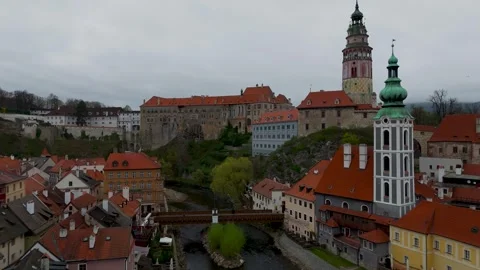
Cesky Krumlov Castle
An sprawling renaissance and baroque castle complex perched aggressively over the Vltava River meander.
Vltava River
The primary winding waterway that cuts through the tight, historic ravines of southern Bohemia.
Cloak Bridge
A massive, multi-tiered stone bridge spanning a deep moat at Cesky Krumlov Castle.
Church of St. Vitus
A prominent gothic church with a towering spire rising from the dense rooftops of Cesky Krumlov.
Havlickovo Square
The historic, colorful town center of Havlickuv Brod, anchored by a prominent Marian plague column.
Pernstein Castle
An isolated, remarkably preserved gothic-renaissance fortress hidden deep within the forests of Nedvedice.
Rozhledna Klucanina
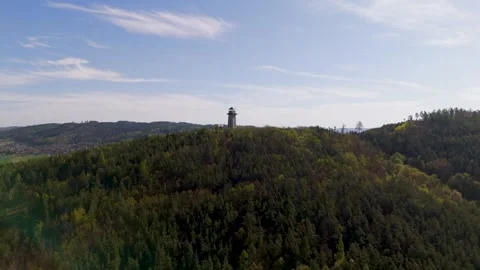
A modern observation tower situated on an elevated, forested peak above the town of Tisnov.
St. Procopius Basilica
A stark Romanesque-Gothic Christian church standing on the elevated riverbanks of Trebic.
Trebic Jewish Quarter
A dense, incredibly well-preserved network of historic homes and narrow alleys along the Jihlava River.
Charles Square
One of the largest public squares in Europe, stretching out through the historic center of Trebic.
Veveri Castle
An extensive, rugged fortress complex overlooking the dark waters of the Svratka River.
Svratka River
The winding river that serves as the natural defensive moat for the Veveri Castle grounds.
Zacharias of Hradec Square
A beautifully uniform renaissance town square in Telc, flanked by ornate, pastel-colored gables.
Telc Chateau
An imposing renaissance castle complex bordered by expansive defensive ponds in southern Moravia.
Palacky's Orchards
The structured green spaces and gardens that border the historic stone architecture of Pisek.
Otava River
The major Bohemian waterway flowing forcefully through the historical center of Pisek.
Old Stone Bridge
The oldest surviving stone bridge in Czechia, stretching solidly across the Otava River.
Republic Square
The vast, central plaza of Pilsen, dominated by the massive Cathedral of St. Bartholomew.
Pilsen Brewery
An enormous, active industrial complex featuring towering brick chimneys and exterior fermentation tanks.
Great Synagogue
A stunning, massive Moorish Revival structure with twin domed towers commanding the Pilsen skyline.
Radbuza River
The industrial riverway cutting through Pilsen, bordered by both historic and modern infrastructure.
Jesuit College
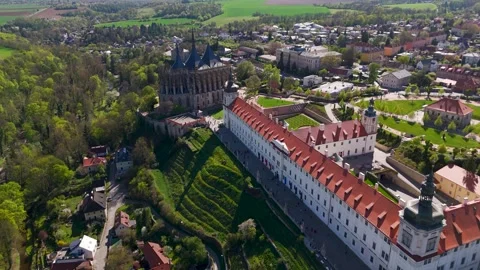
An immense, severe baroque architectural complex extending aggressively along the Kutna Hora ridge.
St Barbara's Church
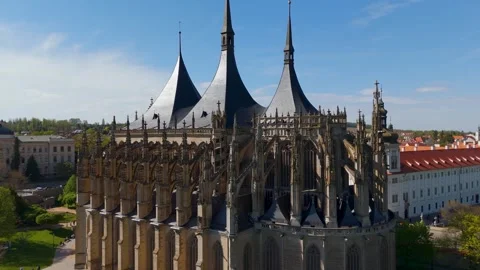
A highly ornate, multi-spired late-gothic masterpiece sitting directly adjacent to the Jesuit College.
Italian Court
The historic royal mint and palace in Kutna Hora, marked by its dense gardens and distinct towers.
Church of St James
A tall, dominating masonry church standing isolated within the urban grid of Kutna Hora.
Palacky Square
The tight, irregular central public space defining the commercial flow of Kutna Hora.
Church of St. Bartholomew
A rugged gothic church structure situated prominently in the Bohemian town of Kutna Hora.
Breuer Gardens
The manicured, terraced green spaces immediately surrounding the Kutna Hora architectural monuments.
St Mary's Church on Nameti
An isolated, sturdy historic church sitting quietly within the residential sectors of Kutna Hora.
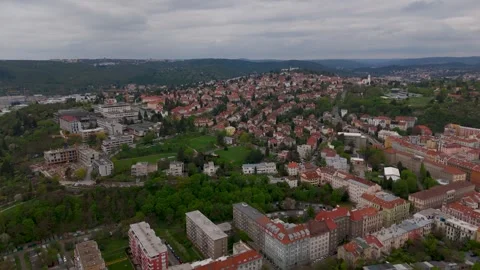
Zluty Kopec
An elevated, green residential neighborhood in Brno featuring large homes and extensive parkland.
Lavicky Park
A formal, structured urban garden providing a green perimeter to the historic center of Pilsen.
Black Waterworks Tower
A dark, utilitarian historical tower sitting amongst the street grid of central Pilsen.
Why the architecture of Bohemia and Moravia warrants isolation
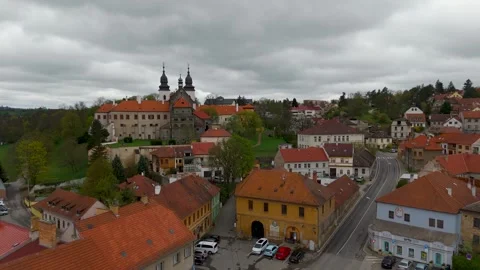
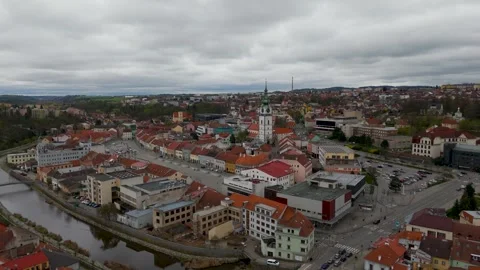
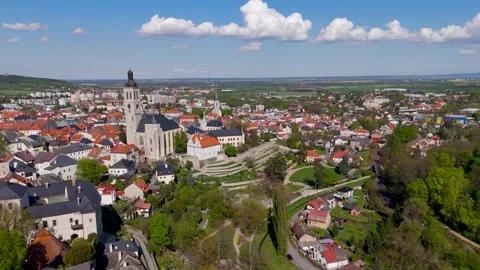
The architectural density outside of Prague provides a logical alternative for filmmakers who need authentic European gothic and renaissance layers without the tourist saturation. When I actually began auditing the airspace above Kutna Hora and Brno, the sheer density of preserved historic masonry became apparent. I spent consecutive days capturing the St Peter and Paul Cathedral and St. Jacob’s Church from every conceivable angle, pushing the drone into tight circling passes and wide reveals. The structures here weren’t just erected for display; they were engineered with a practical dominance that still commands the skyline. Moving through the airspace over the Jesuit College and St Barbara’s Church, I found an intricate array of flying buttresses and steep pitched roofs that feel entirely unreal from a top-down perspective. This isn’t a curated theme park. The urban decay and careful restoration exist side by side, offering an authentic look at central European history. By keeping my flight paths wide and sweeping, I was able to document the structural transitions between the gothic cores and the sprawling residential fringes, capturing the true footprint of these Bohemian and Moravian centers.
Tracing the defensive lines of South Moravia
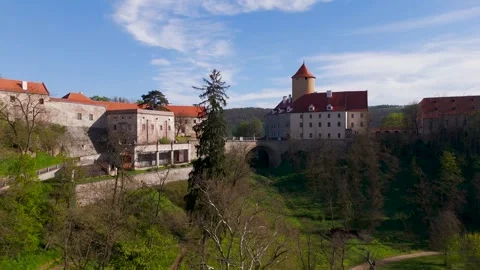
South Moravian castles were positioned with brutal geographic logic, making them exceptionally striking from an aerial perspective. I focused heavily on the fortification networks that dictate the region’s topography. Approaching Pernstein Castle, I found a fortress that sits completely isolated within the lush, rugged valley of Nedvedice. It was built in spite of the challenging terrain, jutting out of the forest canopy like a stone dreadnought. I flew low, sweeping passes across its defensive walls and towering keep to highlight how the architecture aggressively interacts with the landscape. Closer to Brno, Spilberk Castle required a different approach; I utilized top-down framing to isolate its massive geometric footprint from the surrounding woodland of Zluty Kopec. Further out, Veveri Castle demonstrated how these strongholds controlled the waterways, sitting heavily above the Svratka River. The drone allowed me to pull back and reveal the strategic isolation of these castles, proving that their placement was always driven by military pragmatism rather than scenic value.
Aerial perspectives on urban preservation and squares
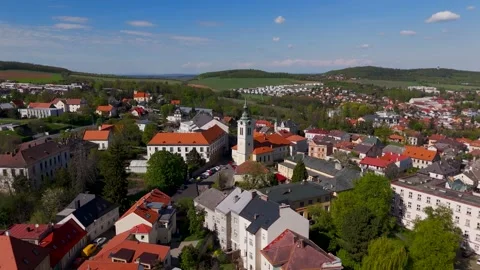
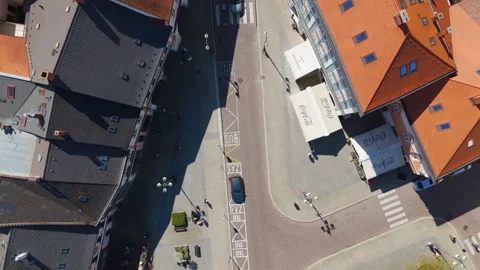
The historic squares of Czechia serve as structural anchors that dictate the practical flow of the entire cityscape around them. Rather than just filming static building facades, I mapped the commercial and social arteries of these towns from above. In Brno, Freedom Square and Vegetable Market Square function as massive open-air arenas surrounded by tight, layered streets. I captured the movement of trams and pedestrians from a strict birds-eye angle, turning the chaotic ground-level reality into a structured, logical grid. In smaller municipalities like Telc, the Zacharias of Hradec Square offers an impressive expanse of colorful, ornate renaissance gables. I executed slow pans backward over the rooftops to emphasize how these squares abruptly give way to the ponds and defensive perimeters of the Telc Chateau. Similarly, Trebic’s Charles Square and Havlickovo Square in Havlickuv Brod required low altitude flights to properly document the Marian plague columns and cobblestone layouts. These public spaces are bizarre in their vastness compared to the narrow alleys that feed them, making for highly dynamic drone reveals.
Bridging the rivers of the Bohemian basin
Waterways like the Vltava and Otava rivers act as the historical lifelines that shaped the dense settlements of southern Bohemia. To understand the geography of Cesky Krumlov, I had to trace the tight meanders of the Vltava River as it aggressively wraps around the historic center. I flew low approaches toward the Cloak Bridge of Cesky Krumlov Castle, moving parallel to the water to emphasize the sheer vertical drop from the foundation to the riverbed. The engineering here is impressive, bridging deep ravines with massive stone arches. In Pisek, the Otava River dictates the town’s entire layout. I captured wide circling shots of the Old Stone Bridge, detailing its ancient masonry against the moving current. Further west in Pilsen, the Radbuza River provided a striking industrial contrast, reflecting the heavy manufacturing and brewing infrastructure along its banks. By constantly referencing the rivers in my flight paths, I was able to ground the gothic and renaissance architecture in its rugged, natural environment.
The bizarre verticality of rural watchtowers and spires
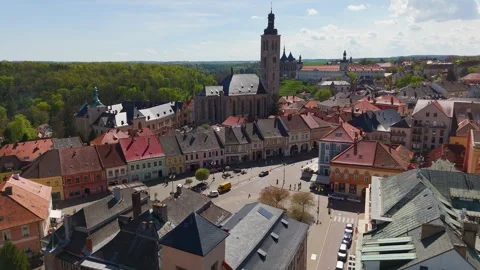
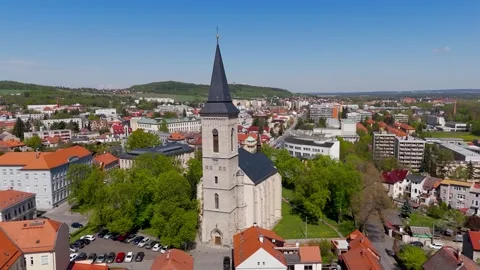
Elevation in the Czech countryside was historically used for surveillance and status, leaving behind an array of isolated towers that cut sharply into the skyline. I found myself repeatedly drawn to these vertical anomalies. In Tisnov, the Rozhledna Klucanina observation tower sits isolated within the treeline, requiring a slow, rising drone spiral to fully appreciate its commanding view over South Moravia. The church spires offer a different kind of vertical dominance. I tracked the clocktower of Stara Radnice and the Mahen Theatre in Brno, maneuvering the drone to pass just meters from the aging brick and copper. In Kutna Hora, the sheer concentration of towers between the Church of St. Bartholomew, the Church of St James, and the Italian Court creates a dense, layered airspace that is incredibly challenging to navigate but visually unmatched. Even in the industrial sectors, structures like the Black Waterworks Tower in Pilsen demonstrate a practical, heavy engineering that rivals the religious monuments in height and presence.
Industrial infrastructure and the brewing centers
The practical infrastructure of Czechia’s brewing heritage offers a compelling contrast to the country’s gothic cathedrals. When I arrived in Pilsen, I actively sought out the industrial zones that define the city’s modern identity. Flying low over the Pilsen Brewery, I captured the massive fermentation tanks and the huge, utilitarian towers that process the region’s hops and barley. The sheer industrial footprint is impressive, especially when framed against the pristine, historic greenery of Safarikovy sady Park and Lavicky Park just blocks away. I utilized top-down shots to emphasize the geometric precision of the brewery’s layout, contrasting it with the ornate, colorful houses lining Republic Square. This isn’t the romanticized version of Europe; it’s the authentic, working engine of Bohemia, captured in high resolution.
Navigating the complex light of the Czech interior
Capturing the intricate details of Czechia’s stonework requires a careful reading of the shifting central European light. The weather here is famously uncooperative, forcing a logical, patient approach to filming. I spent hours waiting for breaks in the overcast skies above Spilberk Castle, finding that the flat, diffused light actually accentuated the rugged textures of the defensive walls better than direct sun. When the conditions did clear, the golden hour across the Bohemian basin was unreal. I shot the Great Synagogue and the cathedral spire in Pilsen at dusk, using slow boomerang flights to catch the fading light reflecting off the copper domes and the Radbuza River. In Trebic, the late afternoon shadows stretching across the Jewish Quarter and the St. Procopius Basilica provided a depth to the masonry that disappears at midday. Whether dealing with the harsh midday contrast over the Church of Saint Anne in Telc or the moody, overcast mornings in Nedvedice, I adapted my flight speeds and camera angles to ensure the architectural details never lost their distinct, historical layers.