How does a city defined by a 2,000-year-old Roman aqueduct and a towering Gothic cathedral stay visually practical? I wanted to see if Segovia’s massive scale actually translates to camera. This collection covers the architectural heavylifting, isolating the stone, the vertical drops, and the bizarrely dense layers of its historic core.
Locations featured in Segovia
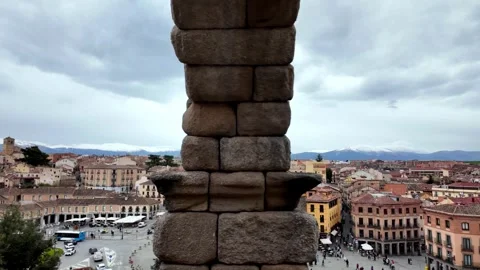
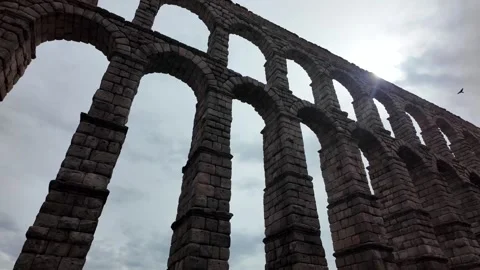
Roman Aqueduct of Segovia
Massive, multi-tiered ancient Roman stone structure cutting directly through the modern city and connecting to the historic walls.
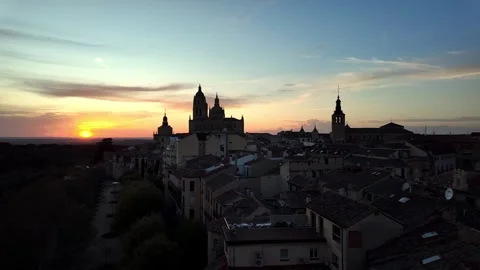
Segovia Cathedral
Towering Gothic structure dominating the skyline, surrounded by dense historic rooftops and the main city square.
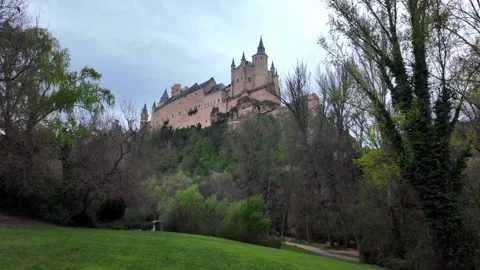
Alcázar of Segovia
Imposing stone fortress perched on a rocky crag above the tree line, featuring deep defensive walls and turrets.
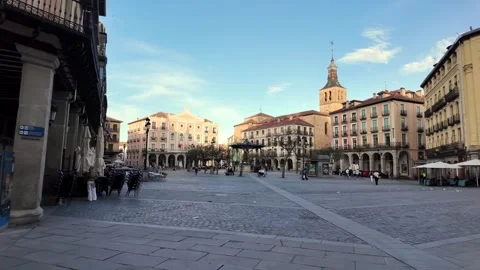
Plaza Mayor
The central square of the historic core, flanked by traditional architecture and serving as the primary approach to the cathedral.
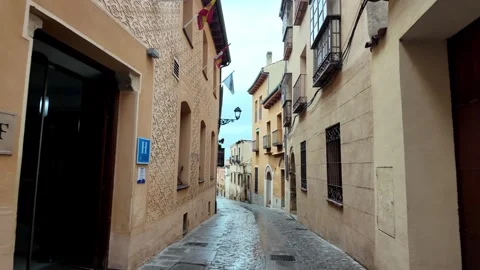
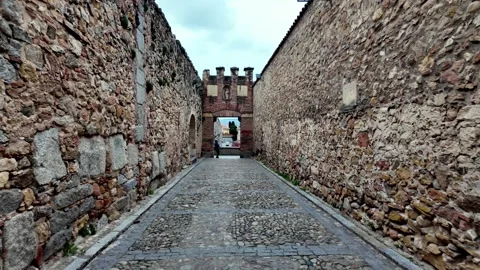
Segovia Old Town
A dense network of narrow, winding stone alleyways and detailed building facades constrained by medieval defensive walls.
Iglesia de San Millán
An isolated Romanesque church sitting outside the main defensive walls, characterized by its traditional porticos and distinct tower.
Iglesia de San Miguel
Historic stone church sitting just off the main square, heavily contrasted against the surrounding commercial architecture.
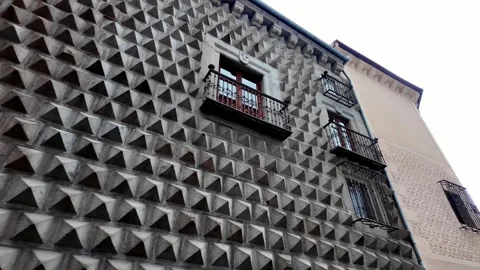
Casa de los Picos
A 15th-century building famous for its bizarre, heavily textured facade made entirely of diamond-shaped granite blocks.
Postigo del Consuelo
A raised viewpoint offering a direct, upward perspective of the aqueduct arches entering the upper historic city.
Plaza de la Merced
A tight, historic square nestled within the narrow alleyways of the old town's dense residential block.
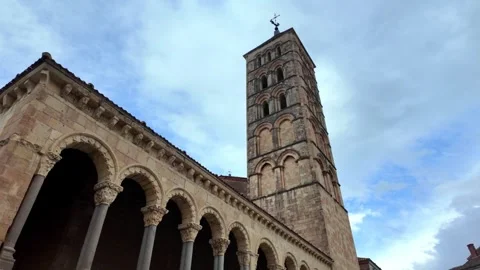
Iglesia de San Esteban
Distinctive medieval church known for its towering, multi-tiered Romanesque bell tower rising above the surrounding rooftops.
Jardín de los Poetas
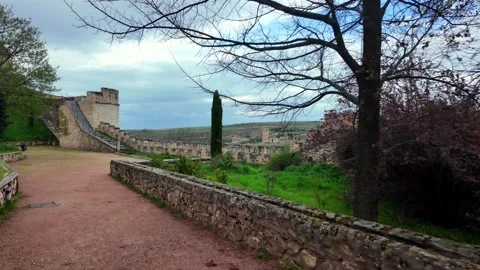
Quiet, terraced gardens built into the western defensive walls, offering structured green space against the stone.
Mirador de San Marcos
An elevated viewpoint sitting across the valley, offering an unobstructed, head-on perspective of the fortress on its crag.
Pradera de San Marcos
The grassy meadow sitting at the base of the fortress crag, providing a steep, dramatic upward angle of the walls.
Puerta de Santiago
A heavy medieval stone gate serving as one of the few surviving historical entrances through the northern city wall.
Eresma River
A narrow waterway cutting through the heavy woodland at the base of the city, wrapping around the fortress crag.
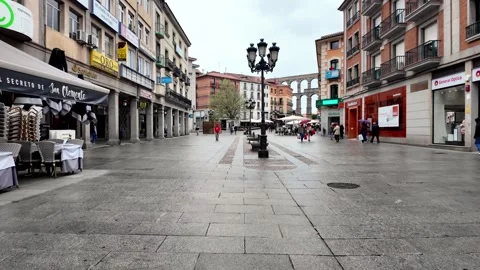
Avenue Acueducto
The primary pedestrian approach leading directly toward the tallest sections of the Roman monument.
Why the architectural scale dictates the camera movement
Segovia demands altitude to make sense of its footprint. You look at the skyline from a distance and it feels impenetrable. Getting a drone up above the rooftops reveals how the city is knitted together. I focused heavily on aerials because ground-level shooting in Segovia Old Town often means hitting a brick wall—literally. Tracing the Roman Aqueduct of Segovia from the Avenue Acueducto right into the dense historic centre requires a drone to appreciate the sheer engineering spite of it. The flight paths following the aqueduct right up to the city walls offer an uninterrupted perspective that ground crews spend days trying to fake. I ran multiple flight paths over the Plaza Mayor to isolate the Segovia Cathedral from the clutter, giving editors wide, unobstructed orbits and top-down establishing shots that you simply cannot get from the pavement. Even lower-profile structures like the Romanesque Iglesia de San Millán require spatial awareness that only a drone provides.
Stripping away the crowds from the historic core
Filming a highly trafficked European capital means actively working around people. I wanted to capture the historic layers authentically, which meant early morning walks and strategic framing. Navigating narrow stone alleys towards Plaza de la Merced or catching the sunrise light hitting the Iglesia de San Miguel required timing over luck. I spent time walking through internal courtyards and terraces to get the authentic scale of the architecture without the noise of mass tourism. By moving to the outskirts and tracking the Eresma River through the woodland, I was able to shoot the Alcázar of Segovia from the Pradera de San Marcos and the Mirador de San Marcos with almost zero foot traffic. It’s an imposing fortress, but isolating it against the snow-capped mountains gives it a surprisingly rugged context.
Balancing wide aerials with street-level texture
While the sky dictates the establishing shots, the actual texture of the city sits in the details of the stone. Lighting in these narrow streets is notoriously difficult; the shadows from the towering structures create high-contrast nightmares by midday. I focused on early morning rain on the Avenue Acueducto and dusk silhouettes across the skyline to maintain usable dynamic range. I shot tracking movements past the bizarre, textured facade of the Casa de los Picos and the intricate balconies near the Iglesia de San Esteban. Shooting from the Postigo del Consuelo gave me a distinct upward angle on the aqueduct’s arches, especially effective during dusk and night when the artificial illumination hits the Roman stonework. Whether it’s panning across the Jardín de los Poetas or flying past the medieval Puerta de Santiago, the objective was to give editors practical, cut-ready assets that ground the sweeping aerials in physical reality.