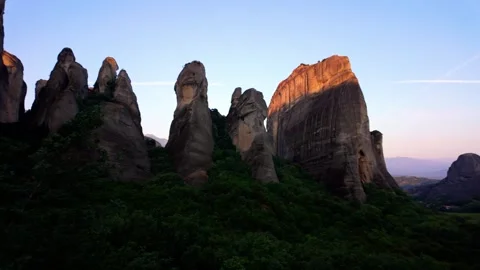
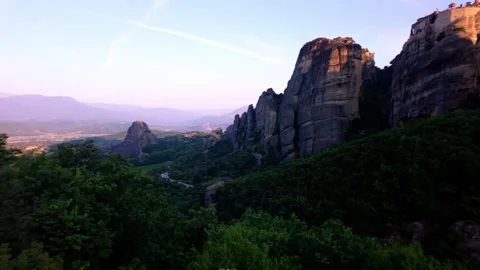
I actually came to Thessaly expecting to just point a camera at the famous floating monasteries, but the region’s layers are far more bizarre. From the isolated rock pillars of Meteora shadowing the rooftops of Kalabaka to the rugged urban ruins of Larissa, this is a practical audit of central Greece’s most dramatic topography.
Locations featured in Thessaly
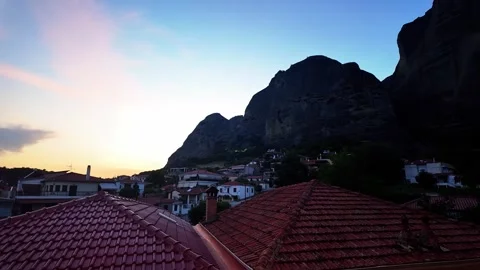
Kalabaka
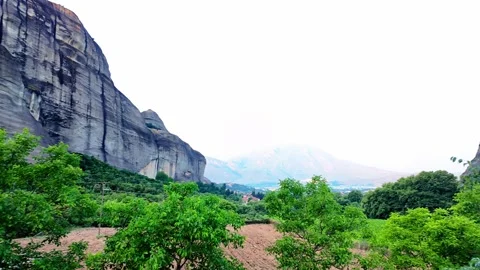
The town nestled directly at the foot of the Meteora cliffs, offering a stark urban contrast to the natural monoliths.
Meteora Monasteries
Historic religious complexes perched precariously on top of sheer sandstone pillars.
Meteora Valley
The lush, forested basin winding between the towering rock formations.
Trikala Old Town
The historic residential core of the city, characterized by dense, traditional rooftops.
Trikala Clock Tower
A prominent historic landmark standing out against the city's skyline.
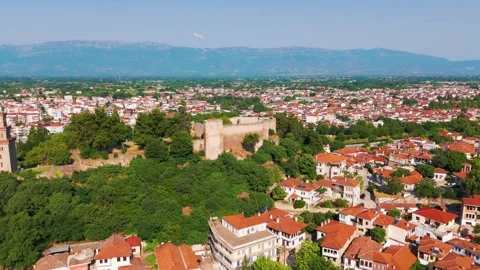
Trikala Castle
The remains of the Byzantine fortress overlooking the modern urban sprawl.
Saint Achillius Metropolitan Church
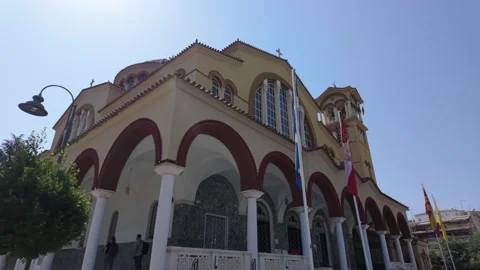
A major ecclesiastical landmark in Larissa featuring intricate architectural frontage.
Platia Miteras Park
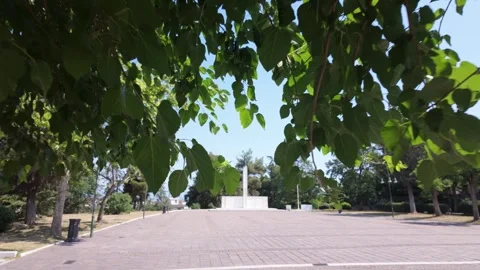
A shaded, tree-lined public square in Larissa featuring solitary statuary.
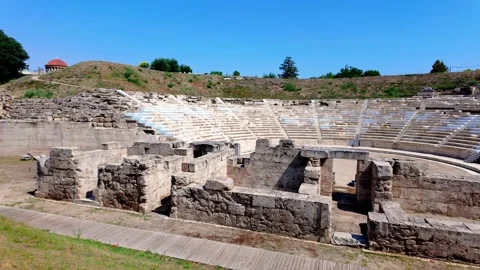
Ancient Theatre of Larissa
Extensive ruins of a classical theatre sitting abruptly amidst contemporary city streets.
Venizelou Street
A central thoroughfare in Larissa flanking the ancient ruins and modern shops.
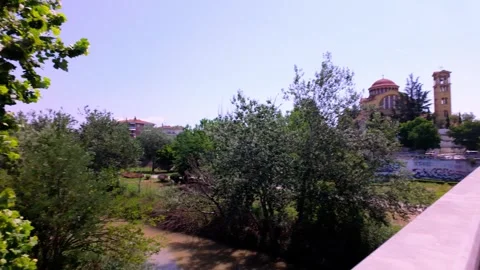
Pinos River
The primary waterway cutting through the urban centers, crossed by pedestrian bridges.
Alkazar Park
A large, green recreational space located just across the river in Larissa.
The geological realities of filming vertical isolation
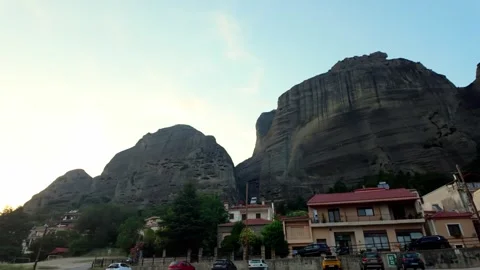
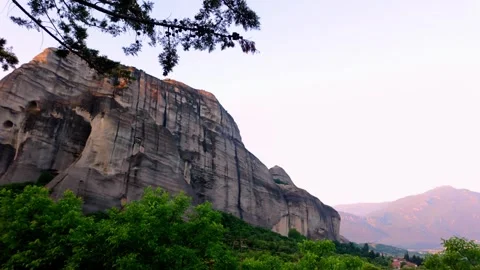
Capturing the sheer scale of Thessaly’s topography requires navigating the harsh light and sudden vertical drops central to this region. My drone coverage focuses heavily on the monolithic rock formations rising directly out of the valley floor, which create a formidable barrier across the landscape. Flying over Kalabaka at sunrise, you get this unreal contrast between the dense, uniform rooftops of the working town and the jagged stone giants looming immediately behind them. The monasteries perched on these pinnacles look as though they were built purely out of spite for gravity, clinging to the very edges of the sandstone pillars. I spent time catching the golden hour light hitting the dense tree canopy from the ground, before sending the drone up to reveal the full expanse of the valley. The shadows cast by the Meteora cliffs over the town at dusk are long and dramatic, creating an entirely different, isolated atmosphere once the sun dips behind the distant mountains.
Mapping the historical urban layers from the air
Moving away from the isolated cliffs, the terrain shifts into dense, practical settlements that demand a completely different flight approach. I spent time circling the historic structures of Trikala to capture the architectural transition between eras. Pushing the drone low over the Old Town rooftops and the winding river gives a logical sense of the city’s historical layout. Getting a close aerial pass by the Clock Tower and continuously orbiting the Castle provided an authentic understanding of how these towns evolved radially around their medieval fortifications. The high-altitude wide shots showcase how the surrounding mountain ranges frame the city limits, proving that the flat plains of Thessaly are frequently interrupted by sudden, impressive topography. It’s not curated for aesthetics; it’s just the rugged reality of Greek urban life operating exactly as it has for centuries.
Ground-level audits of ancient and modern friction
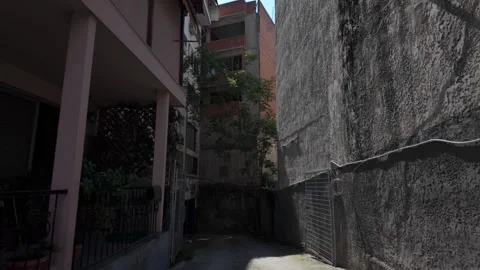
The most jarring architectural contrasts in central Greece exist at street level, where ancient ruins bleed directly into modern infrastructure. I eventually grounded the drone for a practical, eye-level audit of the streetscapes in Larissa to document this bizarre friction. The city presents a rugged mix of protected antiquities and dilapidated urban buildings painted with colorful, chaotic graffiti art. I walked the camera down narrow alleyways with single trees stubbornly growing between stone buildings, before tracking along Venizelou Street past the sprawling remains of the Ancient Theatre of Larissa. The theatre simply sits in the middle of modern commercial streets, offering an impressive layering of eras without any protective buffer. Following the pedestrian bridge over the Pinos River towards Alkazar Park, and panning across the intricate architectural details of the Holy Metropolitan Church of Saint Achillius, reveals a quieter side of the region. Finding a solitary statue hidden within the tree cover of Platia Miteras Park reinforced how many distinct, localized moments exist down on the pavement once you look past the macro landscape.