Toledo gets heavily sold as a time capsule of three cultures, but logistically, it’s an isolated, fortified rock wrapped in a river gorge that makes ground-level filming a claustrophobic nightmare. I spent my time logically auditing this medieval labyrinth from the air and on foot to capture what actually makes the architecture impressive, stripping away the tourist gloss.
Locations featured in Toledo
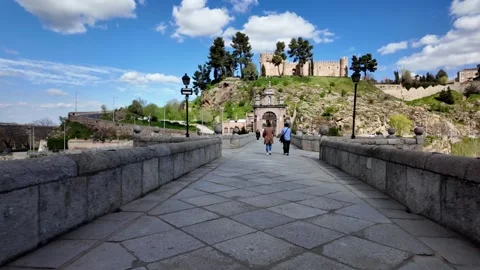
Puente de San Martin
Massive medieval bridge spanning the Tagus River, shot extensively to show the western defensive bottleneck.
Tagus River
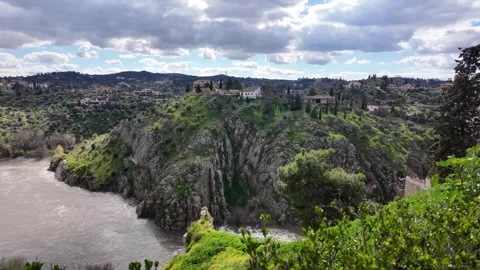
The deep river gorge that wraps around the city, dictating its defensive layout and verticality.
Monasterio de San Juan de los Reyes
Elaborate Gothic monastery offering rare open courtyard space and ornate ceiling details within the dense city.
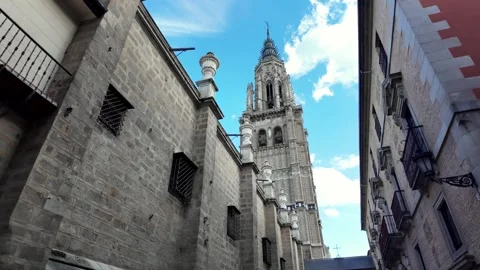
Catedral Primada de Toledo
The towering Gothic cathedral that visually anchors the dense historic centre from the air.
Alcázar
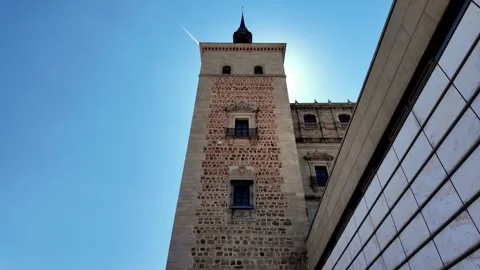
The imposing square fortress at the highest part of the city, dominating the eastern skyline.
Iglesia de los Jesuitas
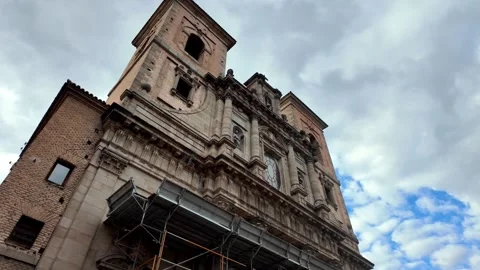
Large baroque church offering distinct architectural contrast against the surrounding medieval rooftops.
Puente de Alcantara
The ancient Roman-origin bridge providing eastern access across the river into the walled city.
Instituto Confucio UCLM
University building integrated into the historic urban fabric, captured from above.
Puente de Azarquiel
Modern bridge infrastructure crossing the Tagus, providing a wider perspective on the river valley.
Castillo de San Servando
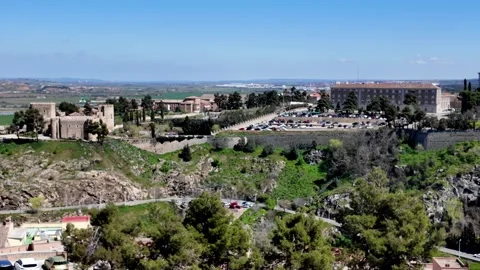
Medieval castle positioned across the river gorge, visually isolated from the main city crush.
Hospital de Tavera
Large Renaissance building situated outside the main walls, offering clean architectural lines.
Convento de la Purísima Concepción
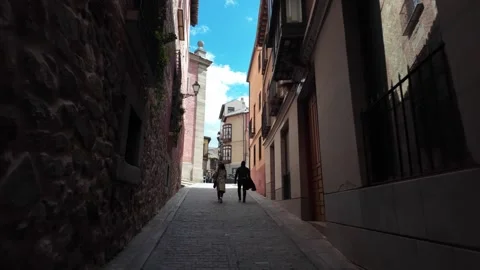
Historic convent situated along the steep, narrow incline of Calle de la Merced.
Palacio de Fuensalida
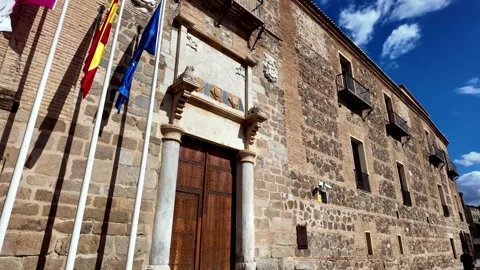
Well-preserved 15th-century palace showcasing the severe, practical masonry of Toledo.
Iglesia de Santo Tomé
Famous historic church featuring a distinctive tower that forces the camera to look sharply up.
San Martín Park
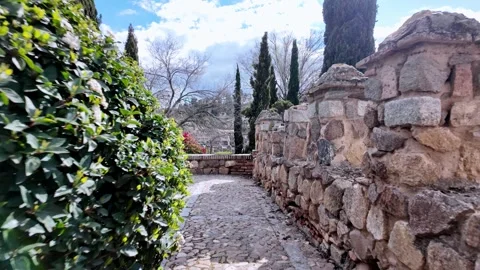
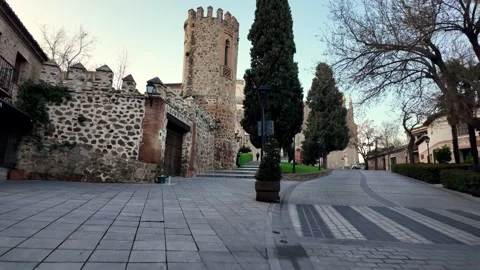
Green space adjacent to the ancient stone city walls, providing a rare flat walking perspective.
Palacio de los Duques de Maqueda
Historic palatial structure accessed via brutally steep, winding alleyways.
Museo del Greco
Cultural site tucked away in the tight labyrinth of the historic centre.
Paseo del Tránsito
Scenic historic promenade that offers a momentary break from the claustrophobic alleys.
Plaza de Zocodover
The main square acting as the focal point where the tight streets finally open up.
Palacio de Congresos El Greco
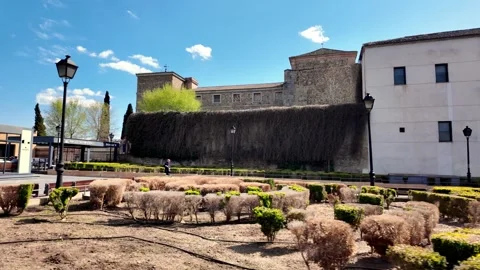
Modern facility with structured gardens that contrast the ancient masonry surrounding them.
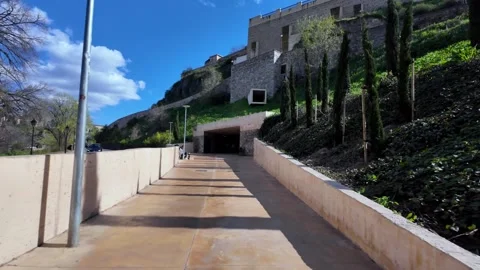
Remonte Mecánico de Safont
The practical modern escalator system cut into the rock to bypass the brutal incline.
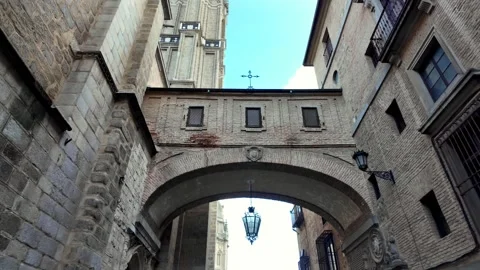
C/ Arco de Palacio
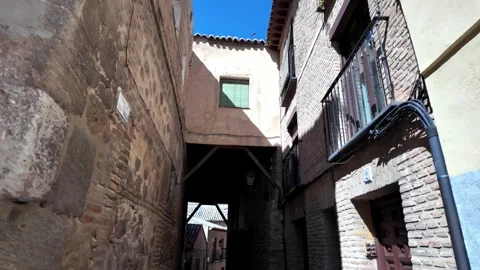
Heavy stone archway characteristic of the layered defensive architecture in the old town.
Cobertizo del Pozo Amargo
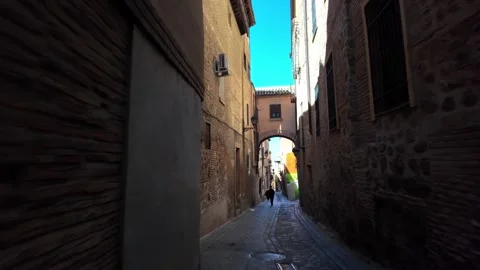
Dark, covered street passage that highlights the severe lack of light in the lower alleys.
Calle del Ángel
Historic street feeding into the network of covered alleys and bitter wells.
Calle Colegio Doncellas
A steeply sloped street featuring a heavy overhead arch that dictates the sightlines.
Iglesia del Hospital de Santa Ana
Quiet religious facade tucked into the dense street grid.
Real Colegio Doncellas Nobles
Historic institutional building offering an impressive facade and a structured entry arch.
Church of Santiago del Arrabal
Distinctive church marked by its Mudéjar brick tower on the lower slopes.
Calle Alfileritos
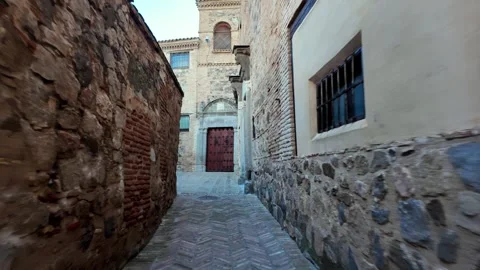
One of the notoriously narrow old town streets where building facades nearly touch.
Calle del Cristo de la Luz
Sloped historic street acting as the main artery toward the ancient mosque.
Mezquita del Cristo de la Luz
Surviving Moorish mosque set behind walled gardens and defensive gates.
Puerta de Valmardón
One of the older, elevated city gates positioned defensively above the approach roads.
Puerta del Sol
Iconic Mudéjar city gate featuring a heavy horseshoe arch and defensive battlements.
Nueva Puerta de Bisagra
The monumental main entryway into the city, flanked by massive circular towers.
Plaza de Cervantes
Small historic square immediately following the brutal passage through the city arches.
Puerta de Alfonso VI
Ancient stone gate integrated directly into the surviving curtain walls.
Calle Real del Arrabal
The main exterior road that traces the imposing defensive perimeter walls.
Hacienda del Cardenal
Estate offering lush courtyard gardens and fountains directly against the old walls.
Recaredo Park
Outer parkland area serving as the base for the mechanical escalators into the rock.
Museo Sefardí
Historic synagogue building presenting a clean, isolated profile from its inner courtyard.
Cobertizo de Santo Domingo el Real
Another claustrophobic covered street tunnel, blocking out the harsh Spanish sun.
Why the Tagus river gorge dictates every practical shot
Toledo is essentially an island built on spite and defensive logic. If you want to understand why this place was historically impregnable, you have to look at how the Tagus River aggressively wraps around the historic centre. I focused my early morning drone flights on tracking the hazy water flowing under the massive spans of the Puente de San Martin and the Puente de Alcantara. You quickly realise that the landscape forces a very specific approach to filming; you either shoot low over the river banks and the Puente de Azarquiel to emphasise the sheer drop, or you pull wide and high to show the isolated skyline. Leaving the city over the river at sunrise gives you the actual scale of the topography.
Aerial dominance and the heavy Gothic skyline
When you get above the rooftops, two structures completely bully the skyline and dictate the airspace. The Alcázar and the Catedral Primada de Toledo demand attention, and capturing them practically requires some distance. I spent time running wide circling shots around both, dropping down for top-down views of the Alcázar’s tower details and pulling back to catch the Gothic cathedral spires against the early morning haze. The contrast between the tightly packed historic centre and these massive architectural anchors is jarring but incredibly effective on camera. I also mapped the airspace around the Iglesia de los Jesuitas and the Instituto Confucio UCLM to get a different vantage point on how the rugged rooftops lock together, alongside the imposing Castillo de San Servando across the gorge.
Navigating the claustrophobia of the historic centre
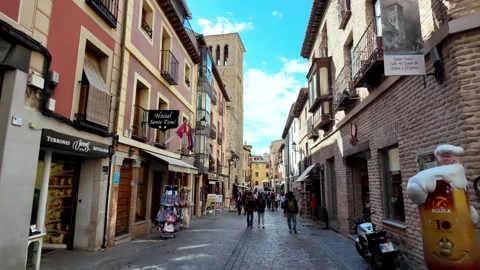
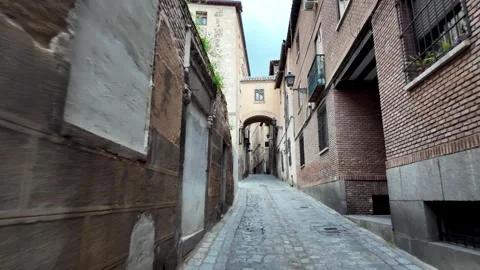
On the ground, the reality of filming in Toledo hits you: it is brutally steep and incredibly narrow. Forget wide-angle establishing shots once you pass the outer walls. I switched to slow-motion tracking walks to document the sheer physical squeeze of alleyways like Calle Alfileritos and the shadowed tunnels of the Cobertizo del Pozo Amargo and Cobertizo de Santo Domingo el Real. The light down here is scarce, hitting the stone only briefly. Walking under the historic arch of C/ Arco de Palacio, exploring Calle del Ángel, or pushing up towards the Iglesia de Santo Tomé, you are constantly fighting for sightlines. This visual compression makes the sudden openings into areas like Plaza de Zocodover or the Paseo del Tránsito feel genuinely earned. I tracked the challenging ascents past the Palacio de Fuensalida and the Palacio de los Duques de Maqueda just to highlight the verticality of the streets.
Decoding the defensive gates and surviving structures
You don’t just walk into Toledo; you have to penetrate layers of defensive architecture. I wanted to audit how the city protects itself, tracking along the ancient stone walls near San Martín Park and pushing through the monumental entryways. The footage covers the approach to the rounded arch of the Nueva Puerta de Bisagra and the steep walks up to the Puerta del Sol and the Puerta de Valmardón. Even the Mezquita del Cristo de la Luz sits heavily guarded behind its own layers and gardens. Shooting slow-motion entries and exits through these gates, particularly around Plaza de Cervantes, the Puerta de Alfonso VI, and along Calle Real del Arrabal toward the Church of Santiago del Arrabal, highlights the imposing stonework that defines the perimeter.
Finding architectural breathing room in the courtyards
The only places within the city where you actually get enough physical space to breathe—and frame a clean, symmetrical shot—are the religious and institutional courtyards. I shot extensively around the Monasterio de San Juan de los Reyes, both from the air at sunrise and on the ground, capturing the ornate Gothic ceilings and courtyard windows. The Hacienda del Cardenal gardens and the massive profile of the Hospital de Tavera just outside the main crush offer a completely different, much quieter visual rhythm. Tracking past the Real Colegio Doncellas Nobles, the Museo Sefardí, and the gardens of the Palacio de Congresos El Greco, the architecture finally stops attacking you and opens up. Even passing the Iglesia del Hospital de Santa Ana or the Convento de la Purísima Concepción, you find brief pockets of engineered calm amidst the chaotic urban plan.